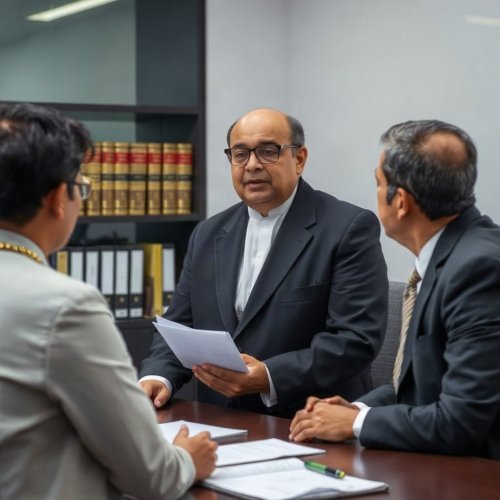
Civil Suit Process Allahabad Court Procedure
Complete guide to civil suit process in Allahabad. Step-by-step court procedure, documents, timeline, fees, and expert legal advice from Advocate in Allahabad.


Civil Suit Process in Allahabad: Complete Step-by-Step Court Procedure Guide
Filing a civil suit in Allahabad can feel overwhelming if you don't understand the legal process. Whether you are dealing with a property dispute, money recovery matter, or breach of contract, knowing what to expect helps you make informed decisions.
Many people in Allahabad and across Uttar Pradesh face civil disputes but hesitate to approach the court due to lack of awareness. They worry about delays, costs, and complex legal procedures. This guide explains everything about the civil suit process in simple language so you understand your rights and the steps involved.
Why Civil Disputes Occur
Civil disputes arise when one party's legal rights are violated by another. Common situations include:
-
Property ownership conflicts between family members
-
Non-payment of dues or loan recovery issues
-
Breach of contract in business dealings
-
Landlord-tenant disagreements
-
Partition of ancestral property
-
Matrimonial disputes including divorce and maintenance
-
Consumer complaints against defective goods or services
For example, if you lend money to someone in Allahabad and they refuse to repay, you may need to file a recovery suit. Similarly, if a builder fails to deliver your flat as promised, a civil suit becomes necessary.
Common Mistakes People Make:
-
Delaying legal action until it is too late
-
Losing or failing to preserve important documents
-
Trying to handle complex matters without legal advice
-
Believing that filing a suit guarantees quick results
What Indian Law Says About Civil Suits
The Code of Civil Procedure, 1908 is the primary law governing civil suits in India. It provides a uniform procedure for all civil courts, including those in Allahabad. The Code applies to every civil suit filed in Indian courts unless specifically excluded.
Key Legal Principles:
-
Jurisdiction: A civil suit must be filed in the court having jurisdiction over the subject matter and territory. For example, a property dispute in Allahabad should be filed in a court where the property is situated.
-
Cause of Action: You can only file a suit when you have a valid cause of action—a set of facts that gives you the right to seek legal remedy.
-
Limitation Period: Most civil suits must be filed within a specific time period under the Limitation Act. Missing this deadline can bar your claim.
Practical Reality: Indian courts follow a structured procedure, but each case has unique facts. Section numbers in the Code tell the court how to proceed, but the real key is presenting your case effectively with proper evidence and legal arguments.
Step-by-Step Civil Suit Process in Allahabad Courts
The civil suit process in Allahabad follows several stages. Understanding each stage helps you prepare and avoid surprises.
Step 1: Pre-Litigation Consultation
Before filing any suit, consult an experienced advocate. Your lawyer will:
-
Review your documents and assess your case strength
-
Check the limitation period
-
Advise on the appropriate court jurisdiction
-
Help you understand whether litigation is the best option or if alternative dispute resolution like mediation would be more suitable
Many disputes in Allahabad can be resolved through mediation or conciliation, which saves time and money. The Allahabad High Court Mediation and Conciliation Centre has successfully settled thousands of cases through this process.
Step 2: Drafting and Filing the Plaint
The first formal step is filing a plaint—a written application containing your complaint. The plaint must include:
-
Name and description of both parties
-
Facts of the case clearly stated
-
Cause of action with specific dates
-
Relief sought from the court
-
Valuation of the suit for court fee purposes
Documents to be filed with the plaint:
-
All supporting documents
-
Required court fee
-
Process fee for summoning the defendant
e-Filing: Allahabad High Court has introduced e-filing for civil matters. You can file your case online, eliminating the need to visit court premises physically. This is especially helpful for parties unable to travel to Allahabad.
Step 3: Court Registration and Summons
Once the plaint is accepted, the court registers the suit and issues a summons to the defendant. The summons:
-
Orders the defendant to appear in court on a specified date
-
Requires the defendant to file a written statement or defense
Important: The defendant must appear before the court on the date specified in the summons. Failure to appear may result in an ex parte decision against the defendant, meaning the court proceeds without their input.
Step 4: Filing Written Statement by Defendant
The defendant must file a written statement within the time allowed by the court. This document:
-
Responds to each allegation in the plaint
-
Raises any objections or defenses available
-
May include a counterclaim against the plaintiff
Recent developments: Courts now discourage delays in filing written statements to expedite civil proceedings.
Step 5: First Hearing and Framing of Issues
At the first hearing, the court examines the plaint and written statement to understand the dispute. Key tasks at this stage:
-
Fixing the value and jurisdiction of the suit
-
Ensuring both parties are properly represented
-
Framing issues—the disputed questions that need resolution
Framing issues is critical because it defines exactly what the court must decide. Both parties can suggest issues, but the court ultimately frames them.
Step 6: Discovery and Inspection
Before the final hearing, both parties can seek:
-
Discovery: Requiring the other party to disclose relevant documents
-
Inspection: Examining documents in the other party's possession
This stage helps both sides prepare their evidence and avoid surprises during trial.
Step 7: Summoning Witnesses and Final Hearing
The court fixes a date for final hearing. Both parties:
-
Attend court with witnesses and evidence
-
Present their witnesses for examination
-
Cross-examine the opposing party's witnesses
-
Submit documentary evidence
During the hearing, each side presents its case to the judge. Witness statements are recorded, and documents are marked as exhibits.
Step 8: Arguments
After evidence is complete, both parties present their arguments. This is your lawyer's opportunity to:
-
Summarize the evidence
-
Explain legal provisions supporting your case
-
Address issues raised by the opposing party
-
Persuade the judge to rule in your favor
Arguments are crucial and require careful preparation.
Step 9: Judgment
After hearing arguments, the court delivers judgment—the decision on the suit. Judgment can be:
-
Pronounced immediately after arguments
-
Reserved to a future date
The judgment contains the court's findings on each issue and the final order. The winning party receives a decree, which is the formal written decision that can be executed.
Step 10: Execution and Appeal
Execution: If you win and the opponent does not comply with the decree, you can apply for execution to enforce the court's order.
Appeal: The losing party can file an appeal to a higher court if they are dissatisfied with the judgment. In Allahabad, appeals from subordinate courts go to the Allahabad High Court.
Documents Required for Civil Suit
| Document Type | Examples | Purpose |
|---|---|---|
| Mandatory | Plaint, affidavit, court fee stamp | To file the suit and prove the case |
| Supporting | Contracts, agreements, property papers, receipts | Evidence for your claim |
| Identity | Aadhaar, PAN, passport, voter ID | Identity verification |
| Optional | Prior notices, police complaints, expert reports | Additional support |
Why each document matters: Courts rely heavily on documentary evidence. Missing documents can weaken your case or result in dismissal. Always keep originals safe and make multiple photocopies.
Time Required for Civil Suit
Civil suits in India can take anywhere from a few months to several years, depending on:
-
Complexity of the case – Simple money recovery may be faster; property disputes take longer
-
Number of witnesses and documents
-
Court workload – Allahabad courts handle thousands of cases, which affects scheduling
-
Availability of judges and lawyers
-
Cooperation of both parties
Typical Timeline:
-
Filing and registration: 1–2 weeks
-
Service of summons: 2–4 weeks
-
Filing written statement: 1–2 months
-
First hearing and issue framing: 2–3 months
-
Final hearing and judgment: 6 months to several years
Delays often occur due to:
-
Adjournments requested by parties
-
Failure to serve summons properly
-
Complex cases requiring expert evidence
-
Appeals to higher courts
Mediation option: If your case is referred to mediation and settled, the process can be completed much faster, often within a few months.
Fees Explained
Understanding costs involved in a civil suit helps you plan your budget. Fees vary significantly based on the case.
| Cost Component | Explanation |
|---|---|
| Court Fees | Fixed by court; based on suit valuation |
| Government Charges | Miscellaneous administrative charges |
| Documentation Costs | Drafting, photocopying, stamp paper |
| Advocate Professional Fees | Varies based on complexity, experience, and reputation |
| Consultation Charges | Initial meeting with lawyer |
| Miscellaneous Expenses | Travel, courier, process serving fees |
Advocate fees vary depending on the complexity of the matter, court involved, urgency, documentation, experience of the lawyer, and location.
Cost Ranges: For a standard civil suit in Allahabad, you may expect:
-
Court fees: ₹500 to ₹5,000+ (depends on valuation)
-
Advocate fees: ₹15,000 to ₹1,00,000+ (depends on case complexity)
-
Documentation costs: ₹5,000 to ₹20,000+
Important: These are estimates. Actual costs depend on multiple factors. Never agree to "fixed fees" without understanding what services are included.
Hidden Truths People Don't Know
1. Most Civil Cases Settle Out of Court
Many people don't realize that courts encourage settlement through mediation. The Allahabad High Court Mediation Centre has achieved a success rate of over 45% in cases where mediation sessions were held. Settlement saves time, money, and relationships.
2. Delays Are Common but Can Be Managed
Civil cases are notorious for delays, but strategic case management and proactive communication with your lawyer can minimize waiting periods.
3. Your Lawyer Cannot Guarantee a Win
No ethical lawyer promises guaranteed outcomes. Courts decide based on facts and law. Be wary of advocates who make unrealistic promises.
4. Filing a Suit Creates a Legal Record
Once filed, the case becomes a public record. This can affect your reputation, especially in business or property matters.
5. Appeals Can Extend the Process
The losing party can appeal to the High Court and even the Supreme Court. This means the final resolution may take much longer than the trial.
6. Court Fees Are Refunded in Mediation
If your case settles through mediation, you may be eligible for a refund of court fees, which is a significant cost benefit.
7. Documentation is Critical
Most cases are won or lost based on documents, not oral testimony. Incomplete or disputed documents can derail your case.
8. You Cannot File a Fresh Suit on Same Matter
If your suit is dismissed or decided, you cannot file another suit on the same cause of action (res judicata). This makes proper legal advice essential.
9. Withdrawal of Suit
Under Order XXIII Rule 1 CPC, a plaintiff has an absolute right to withdraw a suit, but you should consult your lawyer before doing so as it can have legal consequences.
10. Preserve All Communication
Emails, WhatsApp messages, notices, and letters can all become evidence. Preserve everything.
Common Mistakes and How to Avoid Them
1. Delaying Legal Action
Avoid: File your suit within the limitation period. Delay can be fatal.
2. Not Consulting a Lawyer Early
Avoid: Seek legal advice before filing, not after.
3. Losing Documents
Avoid: Keep originals in a safe place; make multiple copies.
4. Withholding Information from Your Lawyer
Avoid: Be completely honest. Your lawyer needs all facts, even unfavorable ones.
5. Ignoring Court Summons
Avoid: Always respond to summons. Ignoring can lead to ex parte decisions.
6. Not Preparing Witnesses
Avoid: Brief your witnesses thoroughly; ensure they understand their role.
7. Being Unrealistic About Timelines
Avoid: Accept that court cases take time; plan accordingly.
8. Choosing the Wrong Court
Avoid: Ensure the court has proper jurisdiction. Wrong court means your suit will be dismissed.
9. Not Exploring Mediation
Avoid: Consider mediation as a faster, cheaper alternative to litigation.
10. Changing Lawyers Midway
Avoid: Once chosen, stay with your lawyer unless absolutely necessary.
11. Failing to Apply for Interim Relief
Avoid: If you need urgent orders (like injunctions), apply immediately.
12. Not Serving Summons Properly
Avoid: Ensure defendant is properly served; otherwise, the case may be delayed.
13. Accepting Legal Advice from Non-Lawyers
Avoid: Only rely on qualified advocates for legal guidance.
14. Making Oral Agreements
Avoid: Always put agreements in writing; oral terms are hard to prove.
15. Forgetting to Pay Court Fees
Avoid: Court fees must be paid correctly. Underpayment can delay the case.
When Should You Hire an Advocate?
You should consult an advocate immediately if:
Essential Situations:
-
You receive a court summons or notice
-
You are considering filing a suit
-
You need urgent legal relief (injunction, stay)
-
Your case involves complex facts or law
-
The opposing party is represented by a lawyer
Risks of Handling Without a Lawyer:
-
Mistakes in drafting may lead to dismissal
-
Missing limitation periods can bar your claim
-
Improper service of summons can delay proceedings
-
You may fail to present evidence correctly
-
You may miss opportunities for settlement
Warning: "Do not delay seeking legal advice. In civil matters, time is of the essence. Delay can weaken your case, make evidence harder to gather, and push you closer to the limitation deadline. If you are unsure whether you need a lawyer, it is better to consult one—most advocates offer initial consultations to understand your situation and guide you."
Frequently Asked Questions
1. How long does a civil suit take in Allahabad?
Typically 6 months to several years depending on complexity, court workload, and party cooperation.
2. What is the cost of filing a civil suit in Allahabad?
Costs vary widely. Court fees depend on suit valuation; advocate fees depend on case complexity and experience.
3. Can I file a civil suit online in Allahabad?
Yes. Allahabad High Court offers e-filing for civil matters, allowing you to file cases online.
4. What is a plaint in a civil suit?
A plaint is the written application filed by the plaintiff containing the facts and relief sought.
5. What happens if the defendant does not appear in court?
The court may proceed ex parte and decide the case without the defendant's input.
6. Can a civil suit be settled out of court?
Yes. Courts encourage mediation and conciliation. Cases can be settled before judgment if both parties agree.
7. What documents do I need to file a civil suit?
You need a plaint, supporting documents, court fee, and process fee. A lawyer can guide you on specific documents.
8. How many hearings will my civil case have?
There is no fixed number. Hearings continue until all evidence is presented and arguments are complete.
9. Can I withdraw my civil suit after filing?
Yes. Under Order XXIII Rule 1 CPC, a plaintiff can withdraw the suit. However, legal implications may exist, so consult your lawyer.
10. What is the appeal process after judgment?
The losing party can file an appeal to a higher court within the prescribed limitation period.
11. What is mediation in civil cases?
Mediation is a voluntary process where a neutral mediator helps parties reach a settlement. It is confidential, time-efficient, and can save court fees.
12. What are the different civil courts in Allahabad?
Allahabad has multiple tiers: Subordinate Courts (Civil Judge, Additional District Judge), District Court, and the Allahabad High Court.
13. How are advocate fees calculated?
Fees are based on case complexity, court level, urgency, lawyer's experience, and location. Always discuss fees upfront.
14. What is the limitation period for filing a civil suit?
Limitation periods vary by case type (e.g., 3 years for money suits, 12 years for property). Consult a lawyer for your specific case.
15. What are the grounds for dismissal of a civil suit?
A suit may be dismissed for lack of jurisdiction, failure to state a cause of action, or being barred by limitation.
16. Can I change my lawyer during the case?
Yes, but it may cause delays and additional costs. Discuss with your lawyer before making a decision.
17. How are property disputes handled in Allahabad courts?
Property disputes involving land or buildings are filed in courts having territorial jurisdiction over the property. The process follows CPC provisions.
Why Choose Our Law Firm
Advocate in Allahabad offers expert legal guidance for civil suits with:
Experience
With years of practice in Allahabad courts, we understand local procedures and court practices.
Confidential Consultation
Your privacy is our priority. All discussions remain completely confidential.
Transparent Process
We explain every step, keep you informed, and provide clear estimates of time and costs.
Timely Updates
Regular updates on case progress and hearing dates.
Practical Legal Advice
We focus on practical solutions, not just legal theory. We help you understand whether litigation is in your best interest.
Court Representation
Our lawyers appear before subordinate courts and the Allahabad High Court to represent you.
Pan India Assistance
While based in Allahabad, we assist clients from across India.
Call to Action
If you are facing a civil dispute in Allahabad, do not wait until it is too late. Early legal intervention can:
-
Prevent the problem from escalating
-
Ensure documents are preserved
-
Help you understand your legal position
-
Provide options for resolution, including mediation
Contact Advocate in Allahabad today for a confidential consultation.
Phone: 8181816266
Location: Allahabad, Uttar Pradesh
Visit our website: https://advocateinallahabad.in/
Discuss your legal issue before taking any action. Our experienced civil lawyers are ready to guide you through the process and protect your rights.